
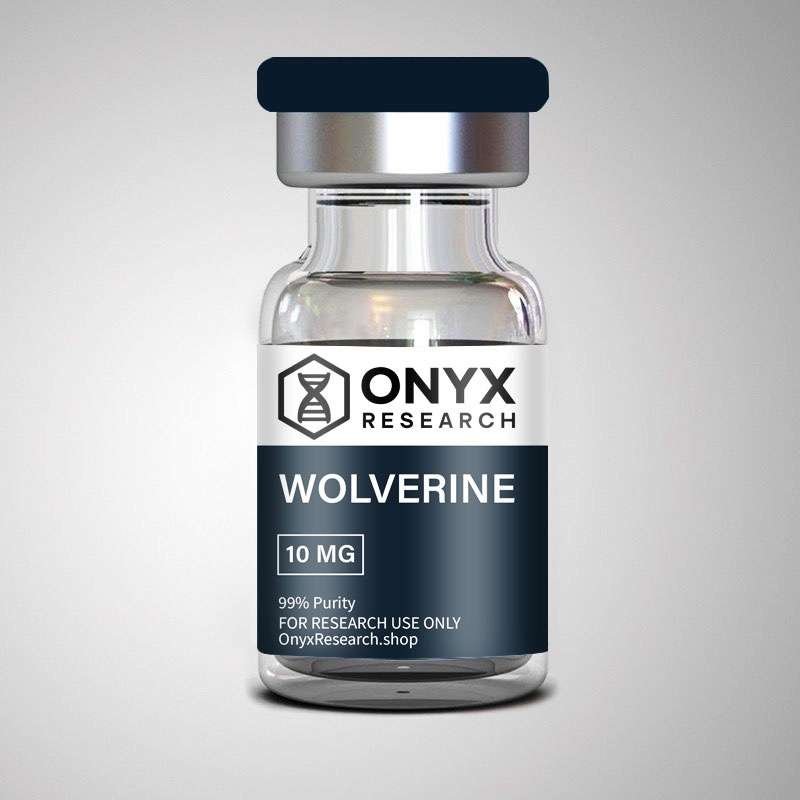
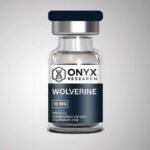
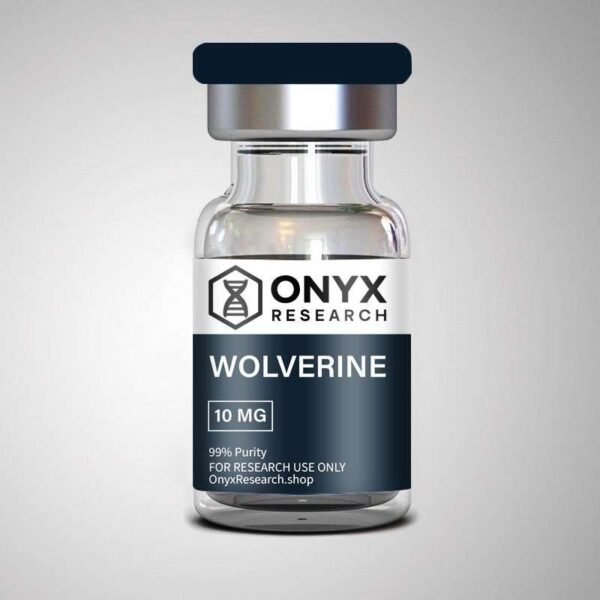
WOLVERINE 10mg (BPC157/TB500)
$80.00

Fast Shipping
Carrier information

20k products
Payment methods

24/7 Support
Unlimited help desk

2-day Delivery
Track or off orders
| QTY | 10mg, 20mg, 30mg, 60mg |
|---|
Description
Wolverine Stack Peptide: BPC-157 and TB-500 Research Guide
Wolverine Stack Peptide refers to a research combination commonly associated with BPC-157 and TB-500. Researchers and peptide enthusiasts often discuss this combination in connection with tissue biology, cellular migration, vascular processes, and musculoskeletal research. However, the science behind each compound deserves a closer look.
This guide explores what the Wolverine Stack means, how BPC-157 and TB-500 work, why researchers study them, what the current evidence shows, how the compounds compare, and what buyers should consider when evaluating research peptides. We will also separate established biological findings from early or preclinical research so readers can make informed decisions about the scientific literature.
What Is the Wolverine Stack Peptide?
The term Wolverine Stack Peptide does not describe one individual molecule. Instead, the peptide community commonly uses the name for a combination of BPC-157 and TB-500.
These two compounds have different biological identities.
BPC-157 is a synthetic pentadecapeptide that researchers have studied in preclinical models involving tissue injury, gastrointestinal biology, vascular activity, inflammation, and musculoskeletal processes. Recent scientific reviews continue to describe substantial preclinical interest while noting the lack of sufficient human clinical evidence.
TB-500 generally refers to the thymosin beta-4 fragment known as LKKTETQ. Researchers often connect its biological rationale to research on thymosin beta-4, a naturally occurring 43-amino-acid peptide that interacts with actin and influences cellular movement and other biological processes.
The combination attracts attention because researchers study different biological processes associated with each compound. That interest does not, however, prove that the combination produces a synergistic effect in humans.
BPC-157 and TB-500: Why Do Researchers Study Them Together?
The idea behind the combination comes from potentially complementary biological pathways.
BPC-157 research focuses on processes such as vascular responses, cellular signaling, tissue biology, and inflammation. Researchers have explored these effects in several preclinical models.
Thymosin beta-4 research provides the biological background for TB-500. Scientists have studied thymosin beta-4 because it interacts with G-actin, a protein involved in cellular structure and movement. Research has also connected thymosin beta-4 with endothelial cell migration and angiogenesis.
That combination of research interests creates a logical scientific question:
Could two compounds that influence different aspects of tissue biology produce complementary effects?
Researchers would need controlled studies to answer that question. Current evidence does not establish a clinically proven synergy between BPC-157 and TB-500.
How Does BPC-157 Work?
BPC-157 does not have one universally accepted mechanism that explains every finding from preclinical research.
Instead, researchers have explored several possible biological pathways. Studies and reviews have examined relationships involving vascular signaling, nitric oxide pathways, cellular responses, tissue remodeling, and inflammatory processes.
The biological interest comes partly from the peptide’s effects in experimental models. Researchers have investigated BPC-157 in models involving gastrointestinal injury, tendon and ligament damage, muscle injury, and other tissue-related conditions.
BPC-157 and Vascular Signaling
Blood-vessel activity plays an important role in tissue biology. Researchers therefore examine whether BPC-157 influences processes associated with vascular responses and angiogenesis.
These studies can help scientists understand how the compound interacts with damaged or stressed tissues. However, findings from animal or laboratory models cannot establish the same effect in humans.
BPC-157 and Cellular Responses
Researchers also investigate how BPC-157 may influence cellular behavior.
Cell migration, tissue organization, inflammatory signaling, and extracellular matrix activity can all affect tissue responses. Scientists can use experimental models to examine whether BPC-157 changes these processes and under which conditions.
The evidence remains primarily preclinical, so researchers must distinguish experimental findings from established clinical outcomes.
How Does TB-500 Work?
TB-500 research connects closely with the biology of thymosin beta-4 and its interaction with actin.
Actin forms an important part of the cellular cytoskeleton. It helps cells maintain their shape and move through their environment. When researchers study compounds that affect actin dynamics, they can examine processes such as cell migration and tissue remodeling.
Thymosin beta-4 interacts with G-actin and can influence actin-related cellular behavior. Research has also demonstrated effects on endothelial cell migration and angiogenesis in experimental models.
TB-500 and Cell Migration
Cell migration matters in many biological processes. Cells must move to specific locations during development, tissue remodeling, and wound responses.
Research on thymosin beta-4 has demonstrated effects on endothelial cell migration. One study found that thymosin beta-4 stimulated endothelial migration and increased activity associated with angiogenesis.
These findings provide a scientific reason for continued interest in thymosin-related research.
TB-500 and Angiogenesis Research
Angiogenesis describes the formation of new blood vessels.
Researchers study angiogenesis because blood vessels deliver oxygen and nutrients to tissues. Thymosin beta-4 research has linked the peptide with endothelial migration, adhesion, tube formation, and angiogenic activity.
Researchers have also explored signaling pathways involving PI3K/Akt, eNOS, and ERK1/2 in endothelial progenitor cell migration.
These findings explain why researchers continue to examine thymosin-related compounds in vascular and tissue biology.
What Is the Wolverine Stack Used For in Research?
Researchers mainly associate the BPC-157 and TB-500 combination with tissue repair research, cellular biology, vascular research, and musculoskeletal models.
The term “used for” can create confusion, though. An experimental research application does not mean that a compound has an established medical use.
Tissue Repair Research
Tissue repair involves many interconnected biological processes.
Researchers examine:
- Cell migration
- Blood-vessel formation
- Extracellular matrix remodeling
- Fibroblast activity
- Inflammatory signaling
- Collagen-related processes
- Cellular survival
- Tissue organization
BPC-157 research has explored several of these processes in preclinical models. Thymosin beta-4 research has independently examined cell migration, angiogenesis, and tissue-related pathways.
The overlapping research interests explain the popularity of the combination.
Musculoskeletal Research
Researchers have investigated BPC-157 in experimental models involving tendons, ligaments, muscles, and other musculoskeletal tissues.
Scientists may examine how experimental compounds influence tissue structure, vascular activity, cellular behavior, and recovery-related biological processes.
However, researchers should not interpret positive animal findings as proof that the same compound can treat an injury in humans.
Wound Biology
Thymosin beta-4 research has attracted interest in wound biology because of its relationship with cellular migration and angiogenesis.
Scientists can investigate how cells move across damaged areas, how vascular systems respond, and how tissues reorganize during experimental wound models.
This research provides biological context for interest in TB-500, but it does not establish TB-500 as an approved wound treatment.
Potential Benefits and Research Interest
People often search for Wolverine Stack benefits, but scientific writing needs to distinguish potential biological effects from proven human benefits.
Findings From Preclinical Research
Research involving BPC-157 and thymosin beta-4 has explored:
- Tissue-related biological responses
- Cellular migration
- Angiogenesis
- Vascular signaling
- Actin dynamics
- Inflammatory pathways
- Extracellular matrix processes
- Musculoskeletal models
- Wound-related biology
These findings create useful research questions, but they do not prove that the combination delivers the same effects in people.
What Human Research Tells Us
Human evidence remains limited compared with the amount of online discussion surrounding these compounds.
A recent review describes BPC-157 as a compound with extensive preclinical investigation but notes that it lacks the comprehensive clinical evidence required to establish health benefits in humans.
Researchers should therefore treat claims about recovery, healing, performance, or other human outcomes with caution.
Wolverine Stack and Tissue Repair Research
Tissue repair provides the strongest reason for scientific interest in this combination.
Imagine tissue repair as a coordinated biological process rather than one event. Cells must communicate, migrate, reorganize their surroundings, manage inflammation, and establish appropriate blood supply.
BPC-157 research examines several pathways connected to these processes.
Thymosin beta-4 research provides another perspective. Its relationship with actin allows researchers to investigate cell movement and cytoskeletal behavior. Scientists have also connected thymosin beta-4 with endothelial migration and angiogenesis.
The two research profiles therefore overlap in several areas.
Still, researchers should avoid the assumption that BPC-157 + TB-500 automatically equals faster tissue repair. Controlled studies must establish whether the combination produces additive or synergistic effects.
Wolverine Stack and Muscle Research
Muscle research represents another area of interest.
Muscle tissue requires coordinated vascular, cellular, and structural responses after injury. Researchers can examine these processes through laboratory and animal models.
BPC-157 research has included experimental models involving muscle and other musculoskeletal tissues. The scientific questions often focus on cellular responses, vascular processes, tissue organization, and inflammatory pathways.
TB-500 attracts interest because thymosin beta-4 research connects actin dynamics with cell movement and tissue biology.
The combination therefore creates a useful research hypothesis. Yet current evidence does not establish the stack as a proven human muscle-recovery treatment.
Wolverine Stack vs BPC-157 Alone
| Research factor | BPC-157 | BPC-157 + TB-500 |
|---|---|---|
| Composition | One peptide | Two distinct compounds |
| Main research areas | Tissue, vascular, gastrointestinal and musculoskeletal models | Tissue, cellular and vascular research |
| Research maturity | Mostly preclinical | Combination evidence remains limited |
| Mechanistic focus | Multiple proposed biological pathways | Potentially complementary pathways |
| Human evidence | Limited | Limited for the combination |
| Proven medical treatment | No | No |
The table highlights an important point: adding another compound does not automatically establish a stronger research effect.
Wolverine Stack vs TB-500
TB-500 and the Wolverine Stack also differ in scope.
TB-500 generally refers to a thymosin beta-4 fragment. The Wolverine Stack typically adds BPC-157 to that compound.
Thymosin beta-4 research focuses strongly on actin interaction, cellular migration, angiogenesis, and tissue biology.
BPC-157 brings a separate research profile involving vascular and tissue-related pathways.
Researchers may therefore compare the compounds when they investigate different biological questions. The appropriate choice depends on the experimental model and research objective rather than popularity.
Who Researches BPC-157 and TB-500?
Several scientific fields may find these compounds relevant.
Molecular Biology
Molecular biologists can examine signaling pathways, gene expression, cellular responses, and peptide interactions.
Biochemistry
Biochemists can investigate peptide structure, molecular interactions, stability, and biological activity.
Tissue Biology
Tissue researchers can study extracellular matrix remodeling, cellular migration, vascular responses, and tissue organization.
Musculoskeletal Research
Scientists studying tendons, ligaments, muscle, and connective tissue may use experimental models to examine biological responses to injury.
Regenerative Biology
Regenerative biology researchers investigate how cells communicate, migrate, survive, and reorganize tissues after damage.
Research Evidence: What Do We Actually Know?
The evidence falls into several categories.
Established biological findings: Researchers have established important biological functions for thymosin beta-4, including its interaction with actin and its relationship with cellular migration.
Preclinical findings: Researchers have reported effects from BPC-157 and thymosin beta-4 in animal and laboratory models.
Emerging research: Scientists continue to investigate how these compounds influence tissue and vascular processes.
Unanswered questions: Researchers still need stronger human evidence to determine efficacy, safety, optimal applications, and long-term outcomes.
Most importantly, research on BPC-157 and research on thymosin beta-4 do not establish clinical efficacy for the combined Wolverine Stack.
Research Considerations and Safety
Researchers should approach these compounds carefully because laboratory interest does not equal established clinical safety.
The FDA currently lists BPC-157 and TB-500-related substances among compounds that raise safety concerns in the context of compounding. The agency cites limited safety information and concerns such as immunogenicity, peptide-related impurities, and characterization challenges.
In July 2026, the FDA’s Pharmacy Compounding Advisory Committee also discussed BPC-157-related and TB-500-related bulk drug substances as part of its advisory process.
Researchers should therefore distinguish:
- Research interest from clinical approval
- Animal findings from human outcomes
- A proposed mechanism from proven efficacy
- Product claims from peer-reviewed evidence
- A research product from an approved medicine
This approach helps readers interpret peptide information responsibly.
Why Peptide Quality Matters
A scientifically interesting peptide still requires reliable product information.
Researchers should evaluate several quality indicators before selecting laboratory materials.
Purity
A supplier should clearly state the reported purity of the product and explain the available analytical information.
Identity
Product identity matters because similar names can refer to different molecules, fragments, salts, or formulations.
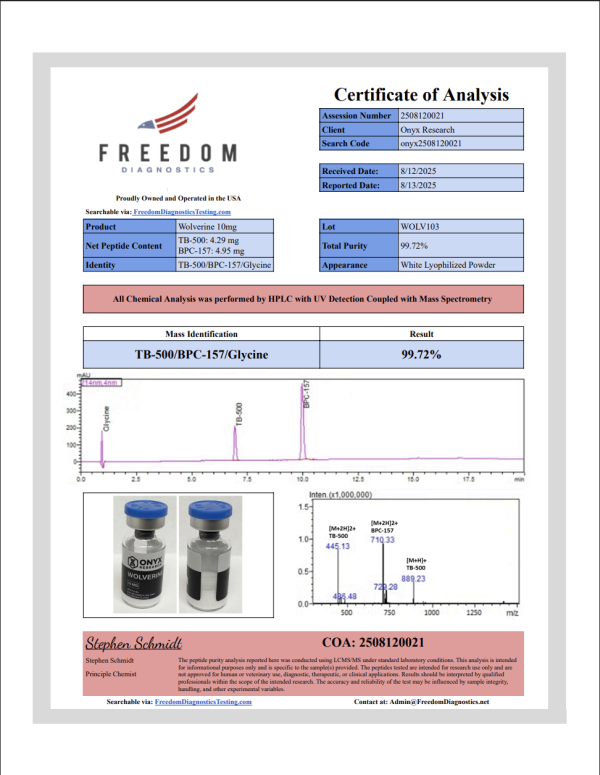
Certificate of Analysis
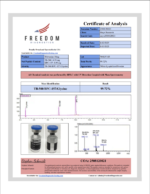
A Certificate of Analysis (COA) can provide batch-specific information about identity, purity, and testing. Researchers should check whether the documentation corresponds to the actual batch they intend to purchase.
Analytical Testing
Researchers should look for transparent testing information rather than relying only on marketing claims.
Storage Information
Clear storage guidance helps laboratories maintain appropriate research materials and preserve sample integrity.
Supplier Transparency
A research supplier should clearly identify the compound, state its intended research use, and provide relevant product documentation.
How to Choose a Peptide Research Supplier
Researchers, laboratory professionals, and consumers can use several criteria when comparing suppliers.
1. Check Product Documentation
Look for clear product names, specifications, intended research use, and analytical information.
2. Look for Batch Information
Batch-specific documentation can help researchers maintain better records and evaluate consistency.
3. Review COAs
A COA provides useful information about reported purity and identity. Researchers should examine the document rather than simply accepting a “high purity” claim.
4. Evaluate Supplier Transparency
A trustworthy research supplier should communicate clearly about product specifications, storage, packaging, and research-use limitations.
5. Avoid Medical Guarantees
Be cautious when a seller promises guaranteed healing, recovery, fat loss, muscle growth, or disease treatment from an investigational peptide.
Scientific content should match the evidence.
Wolverine Stack Peptide at Onyx Research Peptide
Onyx Research Peptide can use this topic to provide researchers and laboratory professionals with clear information about BPC-157, TB-500, and the scientific questions surrounding their combination.
Readers should examine each product page for available specifications, documentation, intended research use, and quality information.
Consumers researching these compounds should also understand the difference between online peptide claims and scientific evidence. The growing popularity of the Wolverine Stack does not establish it as a clinically proven treatment.
For research purposes, a responsible evaluation starts with the compound’s identity, research literature, analytical documentation, and intended laboratory application.
Frequently Asked Questions
What is the Wolverine Stack Peptide?
The Wolverine Stack commonly refers to a combination of BPC-157 and TB-500. It does not represent one individual peptide molecule.
What is the Wolverine Stack used for?
Researchers primarily discuss the combination in relation to tissue biology, cellular migration, vascular processes, musculoskeletal research, and wound-related research. Most evidence remains preclinical.
What is BPC-157?
BPC-157 is a synthetic pentadecapeptide that researchers have investigated in several preclinical models involving tissue biology, gastrointestinal systems, vascular activity, and musculoskeletal processes.
What is TB-500?
TB-500 generally refers to the thymosin beta-4 fragment LKKTETQ. Research on thymosin beta-4 provides much of the biological context for interest in this compound.
How does BPC-157 work?
Researchers have investigated BPC-157 across several biological pathways involving vascular signaling, cellular responses, inflammation, and tissue biology. No single mechanism explains every reported preclinical finding.
How does TB-500 work?
Research surrounding thymosin beta-4 connects its activity with actin binding, cellular movement, and angiogenesis. Researchers have studied these pathways in laboratory and animal models.
Is the Wolverine Stack FDA approved?
No. The combination does not have FDA approval as a medical treatment. The FDA has discussed BPC-157 and TB-500-related substances in its 2026 compounding advisory process.
Does the Wolverine Stack have proven synergy?
No strong clinical evidence currently establishes synergy between BPC-157 and TB-500. Researchers need controlled combination studies to answer that question.
What does research say about BPC-157?
Preclinical studies have generated interest in tissue, vascular, gastrointestinal, and musculoskeletal biology. However, researchers still need stronger human clinical evidence to establish medical efficacy.
What does research say about TB-500?
Research connected to thymosin beta-4 has examined actin dynamics, endothelial migration, angiogenesis, and tissue biology. Researchers should distinguish these findings from direct clinical evidence for TB-500.
What should researchers look for when buying these peptides?
Researchers should evaluate compound identity, purity information, batch-specific COAs, analytical testing, storage information, packaging, supplier transparency, and research-use labeling.
Is the Wolverine Stack suitable for laboratory research?
BPC-157 and TB-500-related compounds remain subjects of scientific investigation. Researchers should determine whether a specific product fits their experimental objectives, laboratory protocols, documentation requirements, and applicable regulations.
Final Takeaway
The Wolverine Stack Peptide represents a popular research concept built around BPC-157 and TB-500.
The scientific rationale comes from the distinct research profiles of these compounds. BPC-157 research explores tissue, vascular, gastrointestinal, and musculoskeletal biology. Thymosin beta-4 research provides important context for TB-500 and focuses on actin interactions, cellular migration, and angiogenesis.
Those findings make the compounds interesting subjects for laboratory research. They do not, however, establish a clinically proven recovery treatment or demonstrate that the combination works better than either compound alone.
For researchers and laboratory professionals, the most useful approach involves careful evidence review, accurate compound identification, analytical documentation, COA evaluation, and appropriate research protocols.
Research Use Only: Research peptides are intended for laboratory research and not for human or veterinary use, diagnosis, treatment, cure, or prevention of disease. This content provides educational information and does not constitute medical advice.


Reviews
Clear filtersThere are no reviews yet.