

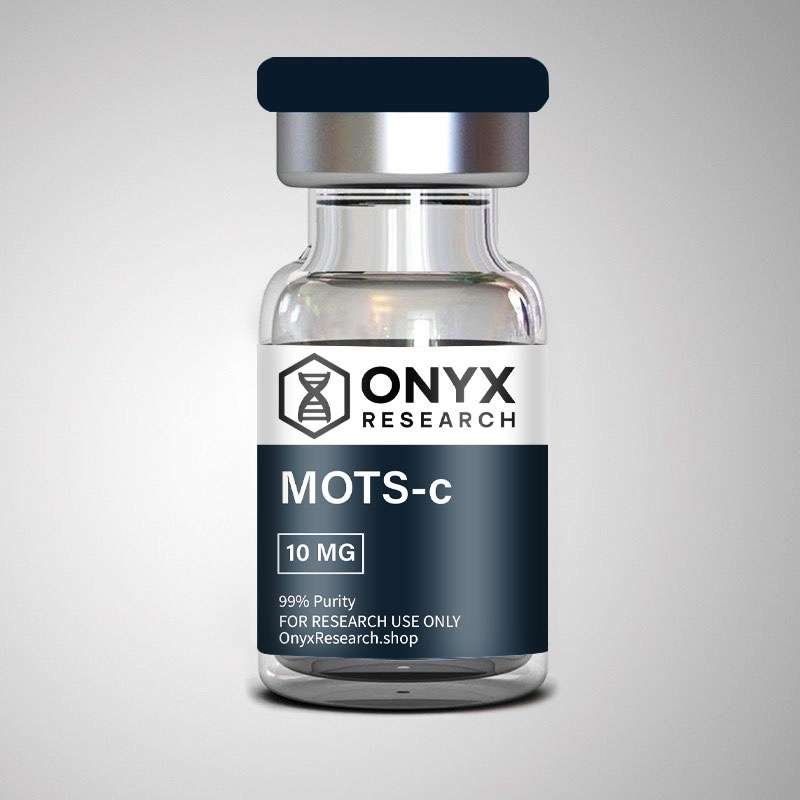
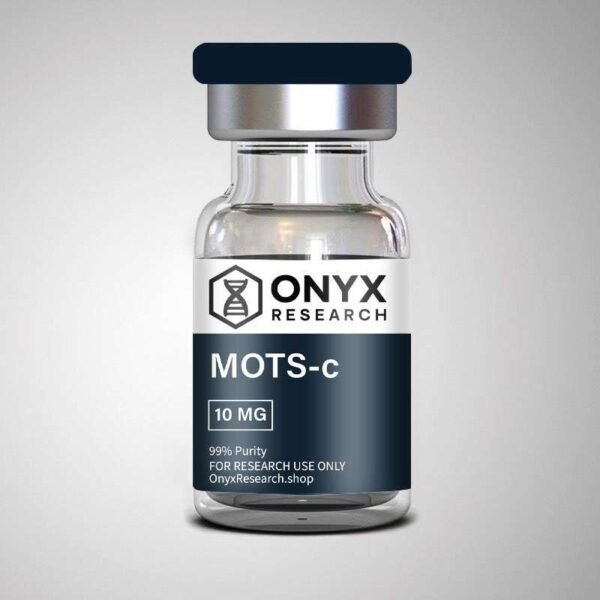
MOTS-c 10mg
$75.00 – $320.00Price range: $75.00 through $320.00

Fast Shipping
Carrier information

20k products
Payment methods

24/7 Support
Unlimited help desk

2-day Delivery
Track or off orders
| QTY | 10mg, 20mg, 30mg, 60mg |
|---|
Description
MOTS-C Dosage: Complete Research Guide for MOTS C 10mg | Onyx Research Peptides
Researchers searching for MOTS C dosage usually need more than basic concentration information. Accurate research preparation requires knowledge about reconstitution, storage, laboratory applications, and product quality. At Onyx Research Peptides, we offer premium MOTS C 10mg products created for research purposes with strict quality standards and third-party testing verification.
MOTS-C is a unique mitochondrial-derived peptide that continues to attract scientific attention. Current research explores its possible involvement in energy metabolism, mitochondrial communication, cellular signaling, exercise physiology, and healthy aging pathways.
Whether you are reviewing a MOTS-C dosage chart, comparing available MOTS-C before and after research data, or looking to buy MOTS-C peptide products for laboratory studies, this complete guide explains important research considerations.
What Is MOTS-C Peptide?
MOTS-C is a naturally occurring peptide encoded within mitochondrial DNA. Unlike many peptides produced from nuclear DNA, MOTS-C originates from the mitochondria, which are often described as the energy centers of cells.
Scientists first identified MOTS-C in 2015. Since its discovery, research interest has expanded because this peptide appears connected to metabolic regulation, glucose utilization, cellular stress responses, and mitochondrial activity.
Researchers commonly investigate MOTS-C in areas including:
- Cellular energy metabolism
- Mitochondrial health
- Exercise physiology
- Glucose regulation research
- Aging studies
- Oxidative stress pathways
- Body composition research
- Metabolic flexibility
Due to its connection with several biological pathways, MOTS-C remains an important subject in mitochondrial peptide research.
How Does MOTS-C Work?
Scientific teams continue examining how MOTS-C interacts with cellular systems involved in metabolism and energy production.
Current research focuses on several key areas:
Energy Production
Cells depend on efficient energy production to maintain normal function. MOTS-C research explores how this peptide may influence glucose utilization and mitochondrial activity.
Metabolic Signaling
Researchers study the relationship between MOTS-C and metabolic sensors such as AMPK, a pathway associated with cellular energy balance.
Cellular Stress Response
MOTS-C investigations include how cells respond to metabolic challenges. As a result, researchers frequently examine this peptide in studies related to cellular adaptation and resilience.
Mitochondrial Function
Since mitochondria play a central role in cellular energy generation, scientists continue exploring how MOTS-C affects mitochondrial communication and activity.
MOTS-C Benefits in Research
Research involving MOTS-C covers multiple scientific fields. Although studies remain ongoing, investigators continue exploring its relationship with important biological processes.
Common research areas include:
Metabolic Research
Scientists examine how MOTS-C may influence glucose metabolism, energy usage, and metabolic signaling pathways.
Exercise Research
Studies investigate possible connections between MOTS-C, endurance, exercise adaptation, and metabolic flexibility.
Healthy Aging Research
Because mitochondrial efficiency changes over time, researchers evaluate MOTS-C as part of studies focused on age-related cellular pathways.
Mitochondrial Health Studies
Mitochondrial peptides remain an important research area because of their role in cellular communication and energy production.
Body Composition Research
Some investigations analyze how mitochondrial signaling may influence energy expenditure and nutrient utilization.
MOTS C Dosage Guide
Accurate MOTS C dosage information helps researchers maintain consistent experimental conditions. Laboratory protocols may differ depending on study design, objectives, and research models.
Dosage considerations often depend on:
- Research objectives
- Experimental model
- Peptide concentration
- Frequency of application
- Study duration
Many researchers choose MOTS C 10mg vials because they allow flexibility when preparing different research concentrations.
All research protocols should follow approved laboratory procedures and institutional guidelines.
MOTS-C Dosage Chart
The following MOTS-C dosage chart is provided as a general research reference.
| Research Focus | Concentration | Volume | Frequency |
|---|---|---|---|
| Metabolic studies | 5–10 mg/mL | 0.1–0.5 mL | Based on protocol |
| Exercise studies | 5–10 mg/mL | 0.2–0.5 mL | Based on protocol |
| Mitochondrial studies | 10 mg/mL | 0.2–0.5 mL | Protocol dependent |
| Aging research | 5–10 mg/mL | 0.1–0.5 mL | Protocol dependent |
| Cellular studies | Variable | Research specific | Variable |
This MOTS-C dosage chart should only be used as a reference when designing laboratory research procedures.
How to Reconstitute MOTS C 10mg
Proper reconstitution plays an important role in maintaining peptide quality and concentration accuracy.
Supplies Needed
- MOTS C 10mg vial
- Bacteriostatic water
- Alcohol pads
- Sterile laboratory syringe
- Peptide calculator
Reconstitution Process
- Clean the vial stopper using an alcohol pad.
- Measure the required amount of bacteriostatic water.
- Slowly add the liquid along the vial wall.
- Allow the peptide powder to dissolve naturally.
- Gently mix the solution without aggressive shaking.
- Store the prepared solution according to recommended conditions.
A peptide calculator can help researchers determine concentration calculations during preparation.
How to Store MOTS-C
Proper storage supports peptide stability and maintains research quality.
Recommended storage practices include:
- Keep reconstituted solutions refrigerated at 2–8°C.
- Protect peptide solutions from direct light exposure.
- Avoid repeated temperature fluctuations.
- Store lyophilized powder in a cool, dry environment.
Careful handling helps preserve product integrity during research projects.
MOTS-C Before and After Research Studies
Researchers reviewing MOTS-C before and after results commonly evaluate several biological markers.
Research measurements may include:
- Energy metabolism changes
- Glucose-related markers
- Mitochondrial activity
- Exercise performance indicators
- Cellular stress responses
- Metabolic flexibility
Since biological responses can differ between research models, scientists typically analyze multiple markers throughout experimental periods.
MOTS-C Side Effects in Research
When investigating MOTS-C side effects, researchers monitor various factors related to peptide handling and experimental outcomes.
Areas commonly evaluated include:
- Injection site observations
- Product stability
- Concentration accuracy
- Cellular responses
- Research protocol consistency
Scientific evaluation of MOTS-C remains ongoing. Therefore, researchers continue collecting information to better understand its properties and potential applications.
Using high-quality, third-party-tested research materials helps support reliable laboratory results.
MOTS-C vs Other Research Peptides
Researchers often compare MOTS-C with other peptides involved in metabolic and cellular studies.
| Peptide | Primary Research Focus |
|---|---|
| MOTS-C | Mitochondrial signaling |
| AOD-9604 | Fat metabolism research |
| Tesamorelin | Growth hormone pathway research |
| CJC-1295 | Growth hormone signaling |
| NAD+ | Cellular energy research |
| SS-31 | Mitochondrial studies |
Each peptide focuses on different biological pathways. Selection depends on the specific goals and design of the research project.
Why Buy MOTS-C from Onyx Research Peptides?
Researchers who want to buy MOTS-C peptide products should prioritize quality, transparency, and reliable testing.
Onyx Research Peptides provides:
✔ Third-party tested products
✔ Certificates of Analysis
✔ Research-grade purity
✔ Secure packaging
✔ Reliable shipping options
✔ Multiple peptide selections
✔ Customer support assistance
Every batch undergoes quality verification to support consistency across research applications.
Related Research Products
Researchers may also explore:
- Peptide Calculator
- Bacteriostatic Water
- NAD+
- SS-31
- Tesamorelin
- AOD-9604
- CJC-1295
- Ipamorelin
- BPC-157
- TB-500
Frequently Asked Questions
What is MOTS-C?
MOTS-C is a mitochondrial-derived peptide studied for its relationship with metabolism, cellular signaling, and energy production pathways.
What is the best MOTS C dosage?
Research protocols vary depending on study design, concentration, and laboratory requirements. Researchers typically use structured guidelines when preparing experiments.
What does a MOTS-C dosage chart show?
A MOTS-C dosage chart provides general research references for concentration, volume, and experimental preparation.
How do I mix MOTS C 10mg?
Researchers commonly prepare MOTS C 10mg using appropriate laboratory materials and concentration calculations with tools such as a peptide calculator.
How should MOTS-C be stored?
Reconstituted MOTS-C solutions are generally stored under refrigerated conditions and protected from light.
What are MOTS-C side effects?
Researchers continue evaluating MOTS-C characteristics through laboratory studies and controlled research environments.
What do MOTS-C before and after studies measure?
Researchers often analyze metabolic markers, mitochondrial activity, and cellular responses during experimental studies.
Where can I buy MOTS-C peptide?
Researchers should choose suppliers that provide quality documentation, testing information, and Certificates of Analysis.
Is MOTS-C a mitochondrial peptide?
Yes. MOTS-C is a mitochondrial-derived peptide encoded from mitochondrial DNA.
What is MOTS C 10mg used for?
Researchers use MOTS C 10mg products for laboratory studies involving mitochondrial pathways, metabolism, cellular signaling, and exercise-related research.


Reviews
Clear filtersThere are no reviews yet.